Debunking Common Myths About Pilates and Yoga Combo Classes
“Yoga-Pilates combo” shows up in searches as if one hour could be both practices. It cannot. Here are five myths that follow from that confusion.
You need to be flexible first
You do not. Stiffness is a reason to start, not a reason to wait. A first class at ANIMO spends its time on breath, the centre, and a range you already have. Flexibility, when it changes, is a side effect of practicing, not an entrance exam. If that is your worry, begin with Pilates for beginners.
A combo class means you did both
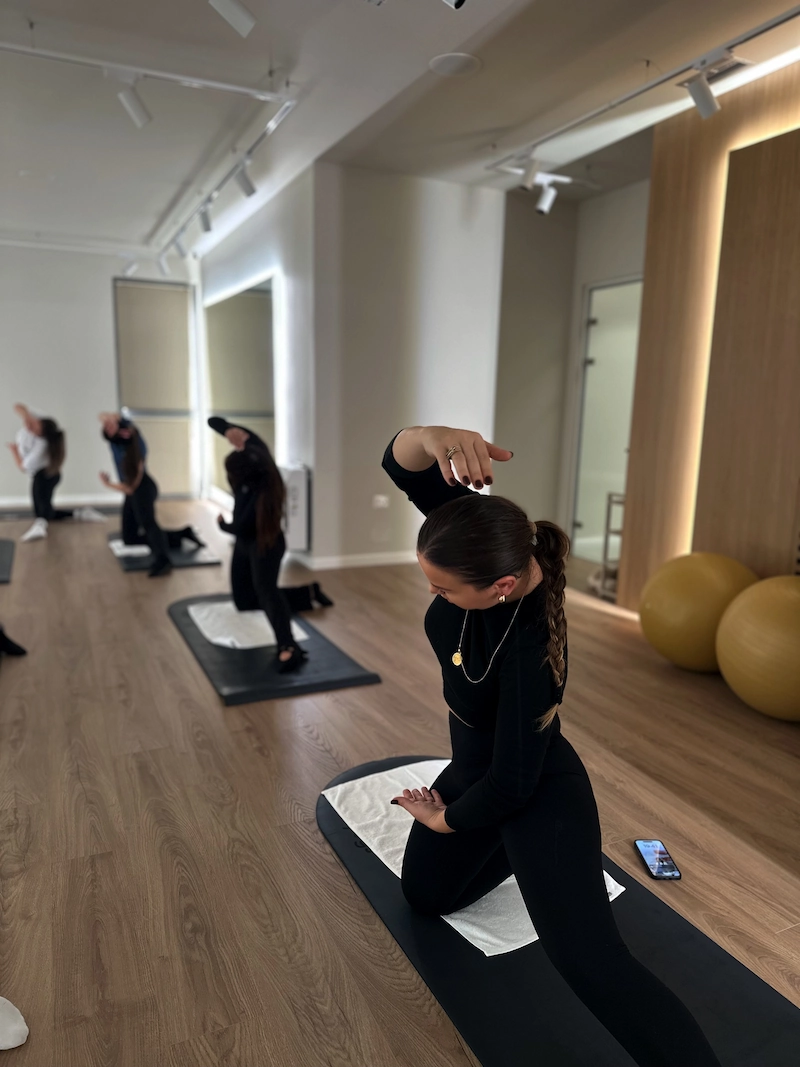
A stretch after core work is still Pilates. Adding the word yoga to a listing does not import a yoga tradition, a pose syllabus, or a teacher trained in one. ANIMO does not run combo classes. We teach Pilates: Mat, Reformer in groups of at most 8, and private hours. The honest split between the two practices is in choosing between yoga and Pilates.
It is only for injuries, or only for people who are already strong
Neither. People come from desk jobs in Tirana, from other training, and from a long time away. Some need a slower pace and book a private hour with the Cadillac, Ladder Barrel, or Chair. Some go straight into a group. Injury rehab belongs with a clinician; a group class is coaching.
The Reformer does the work for you
Springs assist or resist. The instructor chooses which, and you still have to organise the movement. A carriage is not a passive machine. If you want to see what the room actually is, read Reformer Pilates.
If you already do yoga, Pilates is redundant
They train overlapping qualities — attention, mobility, a calmer hour — with different tools. Keeping yoga and adding Pilates can make sense. Replacing one with the other because a caption called them the same thing does not. Look at a real week on the schedule and book the tool you meant.